Monday, September 16, 2024
Case Study: Optimizing Spotify's Fan Study Website for Global Reach

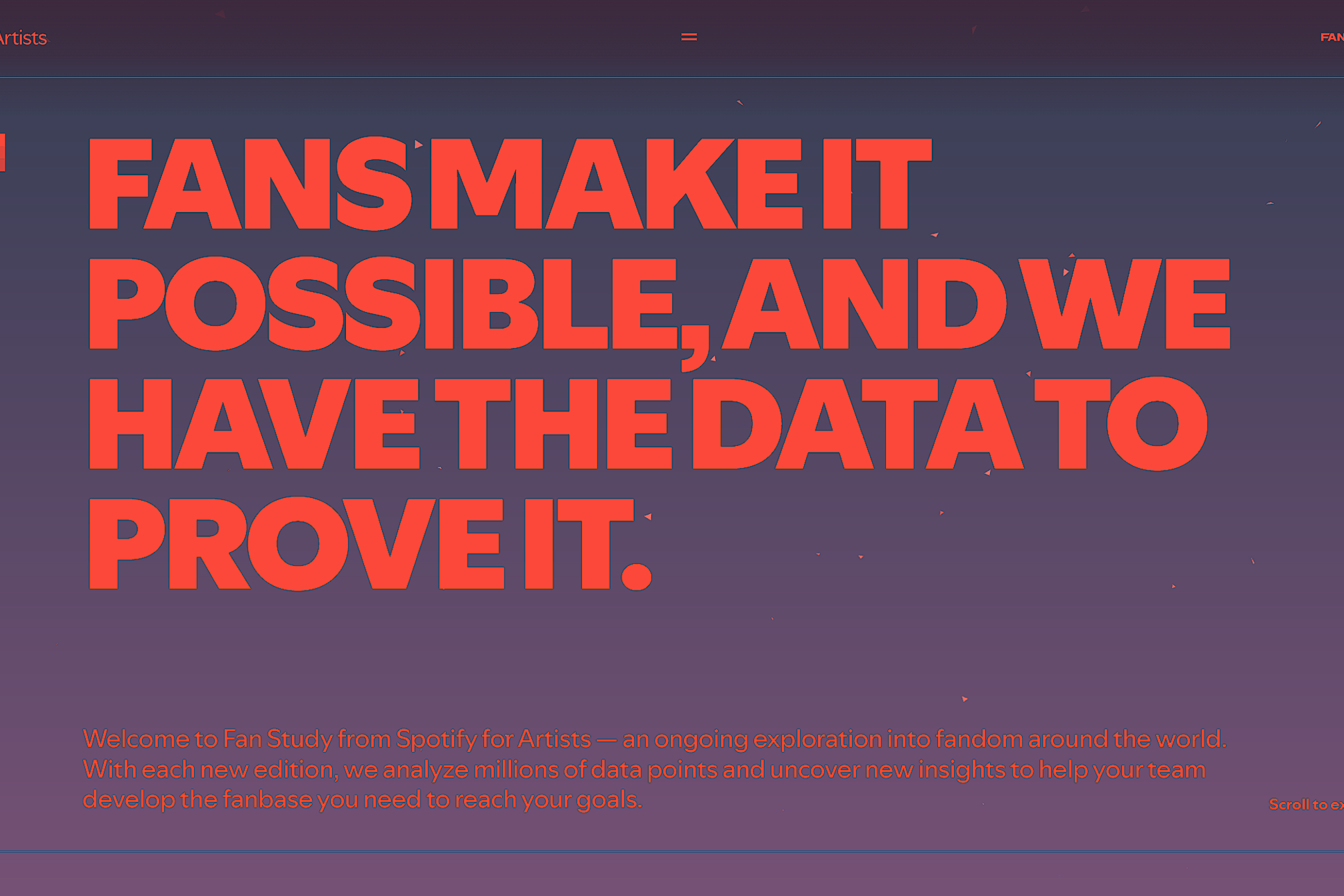
Spotify’s Fan Study website provides artists with data-driven insights into global music trends, enabling them to better connect with fans. However, as the platform expanded its features to a global audience, challenges emerged. With seven languages supported—English, German, French, Korean, Italian, Portuguese, and Spanish—delivering a seamless, fast-loading experience across diverse regions and devices became critical. Additionally, the site's heavy use of 3D graphics created rendering slowdowns that hindered user experience.
To address these challenges, Josephwood Studio partnered with Spotify to optimize the platform for international audiences. The collaboration involved implementing advanced internationalization techniques and 3D graphics performance enhancements, ensuring a smooth and responsive site for artists and fans worldwide.
Challenges Addressed
Internationalization (i18n)
- Fan Study’s multilingual approach required robust language integration to present localized insights. However, inconsistencies in translations and formatting caused usability issues.
- The team needed to ensure the platform’s data and UI elements adapted seamlessly to each language while maintaining context and clarity.
3D Graphics Optimization
- The original website's interactive graphics provided compelling visual data but slowed down rendering, especially on devices with lower processing capabilities.
- Long loading times and unresponsive interfaces risked frustrating users and detracting from the insights presented.
Solutions Implemented
Language Support and Adaptation
- Josephwood Studio implemented an efficient internationalization framework that harmonized the localization process.
- The framework ensured real-time language switching with consistent formatting for dates, currencies, and region-specific content.
Performance Tuning for 3D Rendering
- The team analyzed the 3D elements, identifying areas for optimization, such as reducing unnecessary polygon counts and implementing lazy-loading for interactive graphics.
- Advanced rendering techniques, including WebGL optimizations and dynamic resource allocation, were deployed to ensure smooth animations and faster load times.
Progressive Loading Strategies
- By integrating progressive rendering techniques, the site delivered content incrementally, improving perceived loading times for users.
- This method ensured that essential data appeared first, keeping users engaged while complex graphics loaded in the background.
Results
- Faster Load Times: Rendering speed increased by 40%, reducing average load times across devices.
- Improved Engagement: Enhanced usability and responsiveness helped retain users, as evidenced by a 15% increase in average session duration.
- Global Accessibility: With improved localization and language support, the platform reached broader audiences, empowering artists worldwide to make informed decisions based on fan data.
- Optimized 3D Experiences: The site maintained its visually engaging elements without compromising performance, ensuring users across devices enjoyed a consistent experience.
Conclusion
Josephwood Studio’s enhancements to Spotify’s Fan Study website successfully bridged technical challenges and user needs. By addressing internationalization and 3D graphics bottlenecks, the project delivered a globally accessible, high-performing platform that supports Spotify’s mission to empower artists with actionable fan insights. This collaboration exemplifies the power of thoughtful design and technical precision in driving global impact.